
Landing Surface and Ground Bearing Strength Assessment
Dynamic Cone Penetrometer (DCP) & Magnetic Ruler Course
Course Overview
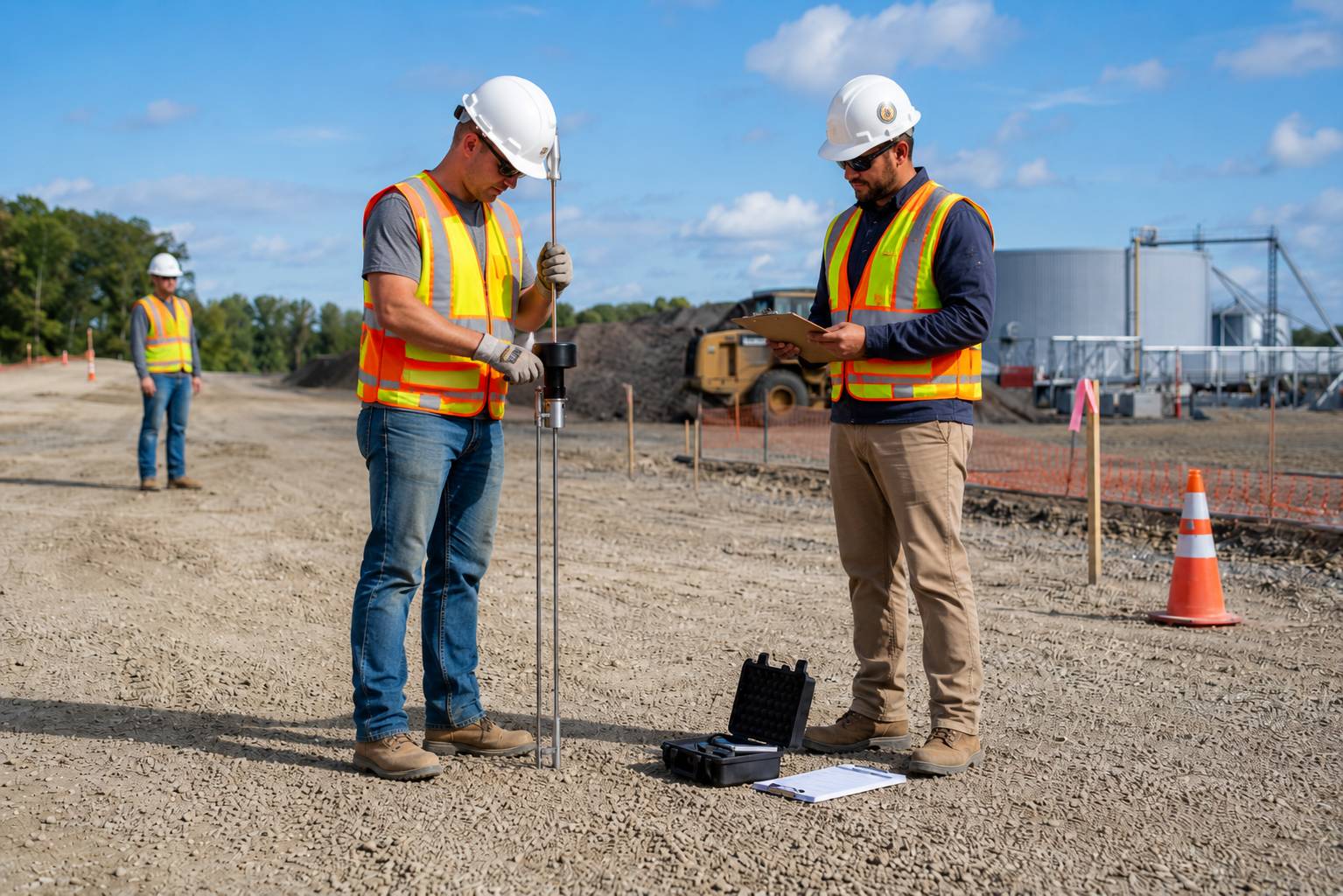
The Dynamic Cone Penetrometer (DCP) & Magnetic Ruler Course provides hands-on technical training for personnel responsible for evaluating soil, aggregate, and surface strength conditions in support of field operations, equipment access, temporary work areas, and site suitability decisions.
This five-day course teaches students how to properly use the DCP and Magnetic Ruler to collect repeatable field data, identify surface and subsurface layer changes, interpret soil and aggregate strength conditions, and document results in a manner that supports informed operational decisions.
Students learn how to select appropriate test locations, conduct DCP testing, record measurements, convert DCP values to California Bearing Ratio (CBR) equivalents, manually plot results, and evaluate how surface and subsurface conditions may affect equipment movement, temporary work pads, access routes, laydown areas, and other field operating surfaces.
Instruction emphasizes accuracy, repeatability, documentation, and sound technical judgment. The course is designed for personnel who need to make defensible field assessments and communicate surface condition risks clearly to planners, supervisors, engineers, safety personnel, and operational decision makers.
What the Course Covers
Dynamic Cone Penetrometer Operation
Magnetic Ruler Use and Limitations
Test Location Selection and Prioritization
Field data collection procedures
DCP Data Collection Procedures
Conversion of DCP Values to CBR
Manual Data Plotting and Interpretation
Subsurface Layer Identification
Soil Strength and Layer Correlation
Surface suitability evaluation
Surface Suitability Evaluation
Go/No-Go Decision Support
Instructional Approach
Immersive, Scenario-Driven Training
The course combines structured classroom instruction with hands-on field application. Students are taught the purpose, limitations, and proper use of DCP and Magnetic Ruler tools before applying those methods in practical field conditions.
Training focuses on disciplined workflows, accurate measurements, proper documentation, and practical interpretation of collected data. Students conduct repeated field tests, plot and interpret results, identify changes in surface and subsurface conditions, and apply the information to realistic site suitability and operational risk discussions.
The goal is not simply to teach students how to operate a tool. The goal is to help them understand what the data means, how to recognize concerning conditions, and how to communicate findings in a way that supports safer and more informed operational decisions.
Operational Environment
Realistic Training Scenarios
Training can be conducted in representative field environments that expose students to a range of surface types, aggregate conditions, soil layers, compaction levels, and operating surfaces. These environments allow students to apply DCP and Magnetic Ruler techniques under realistic but controlled conditions.
The course can support organizations that operate in construction, energy, utilities, heavy equipment, infrastructure, emergency response, aviation, expeditionary operations, and other field environments where surface strength and ground condition assessments affect safety, access, and operational planning.
Target Audience
This course is designed for personnel responsible for evaluating field surfaces, access areas, work pads, temporary operating locations, and other ground conditions that may affect equipment movement or operational safety.
Typical participants may include field supervisors, site safety personnel, operations planners, survey personnel, equipment support teams, construction support personnel, infrastructure teams, and others who need to collect, interpret, or communicate surface strength data.
Training Outcomes
Enhanced Operational Readiness
Upon completion, participants will be better prepared to:
• Operate DCP and Magnetic Ruler tools correctly
• Select appropriate field test locations
• Collect and record repeatable surface strength data
• Convert DCP data to CBR equivalents
• Identify subsurface layer changes
• Interpret soil and aggregate strength indicators
• Document findings clearly
• Support defensible site suitability assessments
• Communicate surface condition concerns to decision makers
• Contribute to risk-informed Go/No-Go recommendations
Training Outcomes
Equipment Options
STS can provide DCP test kits, Magnetic Rulers, and related soil assessment tools for use during training. If a customer is interested in purchasing equipment, STS can obtain the required tools and provide them during the course so students train on the same equipment they will use in the field.
Equipment can be included as part of the overall training package or quoted separately based on the customer’s requirements.